My Digital Soul: The 7 Games That Forged Niko "NightPixel"
NightPixel · 24/03/2026 · 15 min read
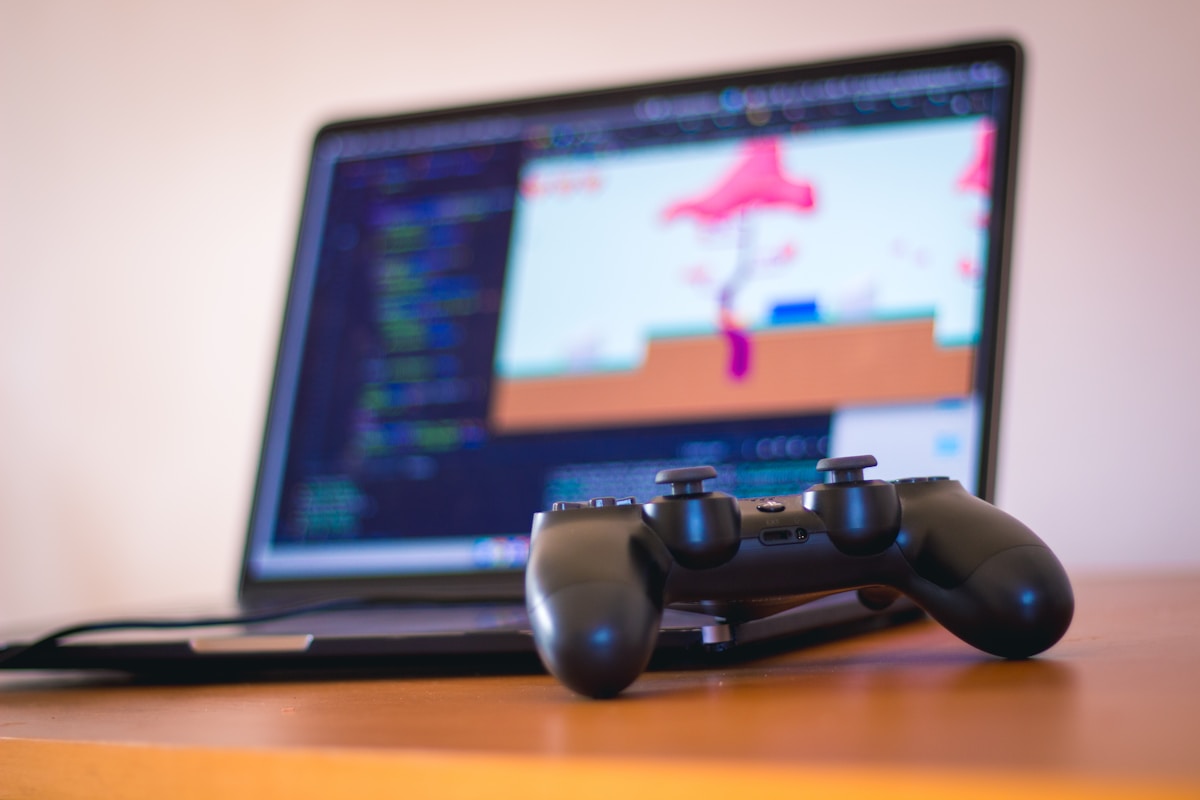
That night, the Nintendo 64 and 'Ocarina of Time' didn't just entertain a kid; they fundamentally reset my entire digital existence, carving out a 'before' and an 'after' that still shape who I am. Those early gaming nights were more than just play – they were the very foundation of my digital soul.
You know, I still remember the night. It was probably '98, or maybe '99. The air in our tiny Sofia apartment was thick with the smell of cheap coffee and my dad’s cigarette smoke. He’d brought home this strange, grey box — a Nintendo 64. I was barely old enough to tie my shoes, but that night, huddled against the glowing CRT, my life irrevocably split into 'before' and 'after'. And then he plugged in 'Ocarina of Time'. That wasn’t just a game; it was an awakening. It wasn't just pixels; it was a world, an escape, a promise. And boy, did I hold onto that promise.
People always ask me, "Niko, you've played thousands of games. Which ones really *got* you?" And honestly, it's not the ones with the best graphics or the biggest budgets. It’s the ones that scratched an itch I didn’t even know I had, the ones that taught me something, or hell, even just made me rage-quit so hard I nearly put my fist through a monitor. These are the seven that burrowed deep into my digital soul and set up shop.
The First Spark: The Legend of Zelda: Ocarina of Time
Man, *Ocarina of Time*. I mentioned it already, right? But I need to reiterate. This wasn't just a game; it was my first real journey. I was a little kid in Bulgaria, a place where fancy consoles were rare as hen's teeth. My dad, bless his soul, he understood. He saw that spark in my eyes. I remember the sensation of stepping out into Hyrule Field for the first time. That vastness! The music! It felt like the world just opened up. Every bush I cut, every rupee I found, every dungeon puzzle I solved with my dad muttering "Think, Niko, think!" over my shoulder – it was magic.
"Ocarina of Time wasn't just pixels; it was my first world. My first adventure. It taught me that games could be more than just a distraction; they could be a life."
This game taught me perseverance, even before I knew what that word meant. Those damn Water Temple puzzles? Nightmares! But the feeling of triumph when you finally figure it out, that’s better than any candy. It set the bar for what a game *could* be, and frankly, most games since then have struggled to reach it. When I worked in QA, I’d always compare puzzle design to *Ocarina*. Most of them just couldn't measure up. No wonder it's still lauded today.
The Art of Patience (and Pain): Dark Souls
Fast forward a decade or so, I’m older, wiser (or so I thought), and I’d played my fair share of 'hard' games. Then *Dark Souls* dropped like a nuclear bomb on the gaming landscape. Everyone was talking about it. "It's impossible!" they cried. "It's unfair!" they whined. Pussies. I picked it up, skeptical, thinking it was just hype. I remember my first dozen deaths to the Asylum Demon. Pure, unadulterated frustration. I nearly rage-quit so many times. But something held me. The atmosphere, the cryptic lore, the sheer audacity of it.
"Dark Souls didn't just teach me to 'git gud'; it taught me the profound beauty of failure and the exquisite taste of victory earned through blood, sweat, and shattered controllers."
This game hammered home a crucial life lesson: patience. And also, that sometimes, you just gotta try a different approach. Or grind. A lot. It wasn't about button mashing; it was about calculated movements, learning enemy patterns, and accepting that you *will* die. A lot. And then dying again. And again. But every time I finally beat a boss, every time I navigated a treacherous area without getting curb-stomped, it was this massive wave of exhilaration. It changed my whole perspective on challenge in games. It's not about being easy; it's about being fair, even when it feels brutal. And *Dark Souls* was brutally fair.
The Real World Simulator: EVE Online
Oh, *EVE*. The game that ate years of my life and taught me more about betrayal, economics, and human nature than any business school ever could. I stumbled into *EVE* during my early days in Israel, looking for something to sink my teeth into, something different from the standard FPS or RPG. And boy, did I find it. This wasn't a game; it was a black hole for your free time and your sanity.
I remember my first time getting ganked in high-sec. My tiny frigate, obliterated in seconds by a pirate gang, all my hard-earned ore floating in space. I was furious. But then I learned. I learned about scams, about corporations, about manufacturing, about the insane politics and wars between player alliances that dwarfed real-world conflicts in their complexity. I was part of a small industrial corp, mining, hauling, building. I saw friendships forged and shattered over a few billion ISK. I saw people dedicate their lives to virtual empires.
"EVE Online isn't a game; it's a brutal, unforgiving, yet utterly fascinating reflection of human greed, ambition, and the lengths people will go for power – even if it's just pixel spaceships."
It taught me cynicism, definitely. Taught me to trust no one implicitly, to always look for the angle. But it also taught me the power of community, of working together towards a common goal, and the satisfaction of building something from nothing. And it showed me that games can create emergent narratives that no developer could ever script. I still occasionally check the news from New Eden, just to see what kind of chaos is unfolding.
The Master Class in Storytelling: The Last of Us
By the time *The Last of Us* came out, I was already a seasoned QA tester, working at a AAA studio. I’d seen behind the curtain, seen how games were made, the compromises, the crunch, the sheer effort. My perspective on games had become a bit jaded, honestly. I knew the tricks, the illusions. But then Naughty Dog dropped this masterpiece, and for weeks, I just forgot all of that.
I remember my first playthrough. It wasn't about the gameplay, though that was tight. It wasn't even about the graphics, which were breathtaking for the PS3 era. It was about Joel and Ellie. Their journey. The raw, guttural emotion of it all. I sat there, controller in hand, sometimes just watching, listening, feeling. When Joel >!kills those Fireflies!<, I debated it for days. Was it right? Was it wrong? Does it even matter? It made me question morality in a way few games had before.
"The Last of Us ripped through my jaded QA-tester facade and reminded me that games, at their absolute best, are powerful, gut-wrenching, soul-stirring art."
This game showed me that video game storytelling could stand toe-to-toe with the best films and literature. It wasn’t afraid to be dark, to be ambiguous, to make you uncomfortable. It proved that gaming is a mature art form, capable of exploring complex themes of love, loss, and survival. It reignited my passion for narrative-driven games and reminded me why I got into this industry in the first place: to experience and create these kinds of stories.
My Personal Battle Royale: Counter-Strike 1.6
Before all the fancy battle royales and hero shooters, there was one king: *Counter-Strike 1.6*. This was my youth, my digital playground, my competitive arena. From my days in Bulgaria, crammed into internet cafes with my friends, to my early years in Israel, *CS 1.6* was the constant. I remember sitting for hours, the clack of mechanical keyboards, the shouts of "Rush B!" or "He's A short, he's A short!" ringing in my ears.
I wasn’t a superstar, but I was decent. I learned clutch moments, how to economize, proper spray control, and the art of the fake defuse. It taught me teamwork, even when my teammates were absolute noobs. It taught me how to communicate under pressure, how to lead, and how to follow orders. It was pure, unadulterated competitive fun, and the rounds were so quick, you could always squeeze in "just one more."
"Counter-Strike 1.6 wasn't just a game; it was my proving ground, my early lesson in competitive spirit, teamwork, and the sheer joy (and frustration) of beating other human beings."
The impact of *CS 1.6* on my gaming skills is undeniable. My aim, my reflexes, my map awareness – all forged in those dusty corridors of Dust 2 and Inferno. It was the foundation that allowed me to excel in so many other competitive games later on. It's where I learned that satisfying headshot sound that still gives me chills.
The World-Changer: Minecraft
Okay, I know, *Minecraft*. Some of you are probably rolling your eyes, thinking it's for kids. And yeah, it is. But it's also for everyone. When *Minecraft* first exploded onto the scene, I dismissed it. Blocky graphics? No clear goal? But then I saw what people were building. The sheer creativity, the ingenuity. I remember watching videos of insane redstone contraptions and sprawling cities, and I got curious.
I dipped my toes in, then plunged headfirst. It wasn't about fighting creepers for me. It was about creation. It was like digital LEGOs on an infinite scale. I spent hours, days even, constructing elaborate underground bases, automated farms, even a pixel-art rendition of the Bulgarian flag (don't judge). It was incredibly meditative, a digital sandbox where my imagination was the only limit.
"Minecraft proved that you don't need hyper-realistic graphics or a cinematic story to create a profound gaming experience. All you need is boundless creativity and a pickaxe."
*Minecraft* wasn't just a game; it was a phenomenon that fundamentally changed how we perceive games. It showed the industry that creativity, player-driven content, and emergent gameplay could be more powerful than any scripted narrative. It reminded me that at its core, gaming is about play, about exploration, and about building worlds, not just conquering them. And sometimes, after a long day of QA'ing broken features, just mining some virtual diamonds was exactly the therapy I needed.
The Unforgettable Symphony: Disco Elysium
And finally, *Disco Elysium*. This game, oh man. Where to even begin? I played this after years of grinding through the AAA machine, after countless games about saving the world or shooting bad guys. I was burnt out, looking for something *different*. And then this Estonian masterpiece dropped onto my PC.
From the moment my horribly dishevelled detective woke up in a trashed hotel room with amnesia, I was hooked. The writing – it’s beyond anything I’ve ever seen in a game. It's literary. It’s philosophical. It's darkly humorous and profoundly depressing, sometimes within the same sentence. Your skills aren't just stats; they're literal voices in your head, arguing with each other, offering terrible advice, or brilliant insight.
"Disco Elysium isn't just a game; it's a conversation with your own psyche, a gritty, beautiful, philosophical masterpiece that redefines what a dialogue-driven RPG can be."
It made me think about identity, about loss, about the decay of society, about the fragile nature of memory. I remember sitting there, staring at the screen for minutes, weighing dialogue options, genuinely torn. There were no right answers, only consequences. This game pushed the boundaries of interactive narrative in a way that left me breathless. It reminded me that even after thousands of games, there are still experiences out there that can utterly blow your mind and change your perspective on what games are capable of. It’s a work of art, pure and simple.
So there you have it. Seven games that aren't just entries on a list, but markers in my life, each one shaping a piece of who I am today. They’re the reason I became a QA tester, the reason I rage, the reason I celebrate, and the reason I still believe in the magic of pixels and code.
🎮 NightPixel, signing off. See you in the next game.
***
FAQ
Q: Niko, you worked in QA for 6 years. Did that ruin gaming for you?
A: Ruin it? No, never. It changed my perspective, for sure. You see the sausage being made, you see the bugs, the impossible deadlines, the creative compromises. It makes you appreciate the games that *do* work, the ones that are truly polished, even more. It also makes you a lot more critical, and sometimes it's hard to turn that part of your brain off. I've found bugs in games I was just trying to enjoy on my day off, and it's a blessing and a curse. But ultimately, the pure joy of the game still wins out. It just means I appreciate the devs even more when they deliver a solid product.
More from the blog
- The Pre-Order Button: Your Ultimate Betrayal (And Why I Stopped Hitting It)
- Game Pass in 2026: Still the King, or Just a Jester in a Crown?
- Couch Co-Op in 2026: The Only List That Matters (Seriously, The Rest Are Trash)
- The Indie Uprising: Why AAA is Dead and Buried in 2026
- My 5,000 ILS Gaming Rig: Why You’re All Paying Too Much (and Still Getting Ripped Off)